In Manhattan Beach, the Ugly Wires Are the Cheaper Wires
September 3, 2026
September 3, 2026
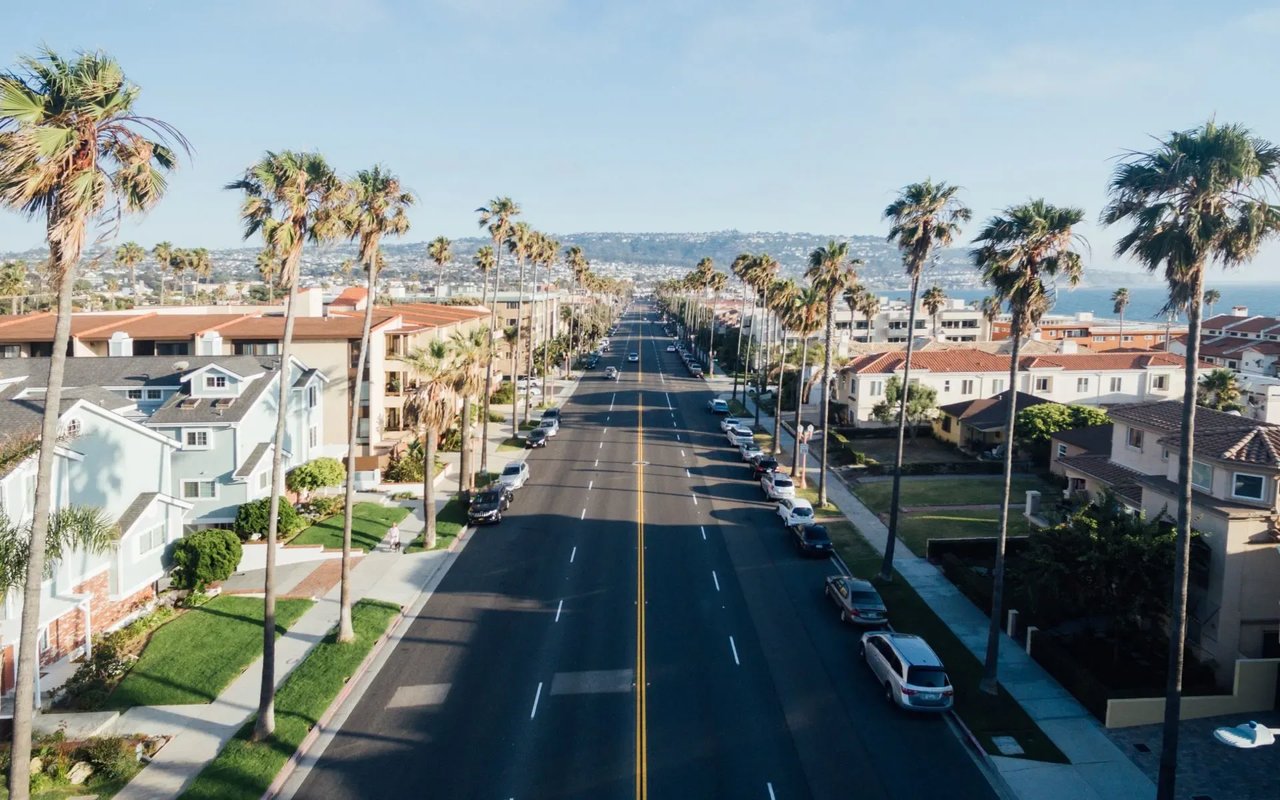
Walk north from the Manhattan Beach Pier and cross a few side streets in El Porto or the pocket east of Highland Avenue, and the sky changes with you. One block runs clean, no poles, no wires crossing the frame between the houses and the ocean. The next block over still has the full grid overhead, transformers, cross arms, the works. It looks like an aesthetic accident, something the city just hasn't gotten around to.
It isn't an accident. It's a decades-long, block-by-block financing project, and the wires still hanging over a street are a better predictor of your future costs than anything on a listing sheet. If you're shopping in Manhattan Beach right now, the ugly block might be the one you can actually afford to own long term. The clean block already paid for it.
Manhattan Beach doesn't underground utilities as a citywide public works project. It does it neighborhood by neighborhood, and only when the neighborhood itself asks for it and agrees to pay for it. The program is called the Underground Utility Assessment District, or UUAD, and it has been running in some form for more than two decades.
Not every proposed district survives the process. Over the years, several districts that homeowners floated were dissolved outright because not enough owners wanted to pay the estimated construction cost. Others made it all the way through: property owners on a handful of established districts voted yes, paid their assessments, and now live under clear sky. Still others sit in between, designed but not yet put to a final vote, which is exactly where the interesting risk lives for anyone buying today.
The process is homeowner-initiated, not a city mandate, and it runs on two separate approval thresholds before a single wire moves underground.
Once a district is formed, each owner's share of the construction cost becomes a real, individually billed line item. Owners can pay it in cash within 30 days of the vote, or spread it over 20 years with interest as an added charge on their annual property tax bill. The city also runs a hardship option: a qualifying owner can defer payment entirely while living in the home, with the city covering the loan in the meantime. The balance doesn't disappear. It comes due when the property changes hands.
That last detail is the one most buyers never think to ask about.
Two districts in El Porto, numbered 12 and 14, have already gone through the full process and are in various stages of construction and conversion. That's most of why El Porto's streetscape looks tidier than it did a few years ago.
The next district in line sits in the pocket of North Manhattan Beach generally described as east of Highland Avenue and south of Rosecrans Avenue, known as District 13. Local reporting in 2019 noted that District 13 was among the districts asking to reform after an earlier attempt stalled. That reform effort has since moved forward in concrete terms: Southern California Edison finished the preliminary underground design work for District 13 in May 2024, and the city has said publicly that it hopes to shift focused effort toward District 13 once construction on Districts 12 and 14 progresses further. That means the Engineer's Report and the formal Prop 218 notification, the steps that turn a design study into an actual bill, haven't happened yet as of this writing.
If you're touring a home inside that boundary this fall, you're not just buying a house with wires overhead. You're buying a house that sits inside a district the city has already flagged as its next priority, with the engineering already half done.
Here's the part that should change how you read a listing. If a prior owner used the hardship deferral and never paid it off, that unpaid balance becomes due at transfer.
Even outside the hardship scenario, an assessment financed over 20 years shows up permanently as a line item on the property tax bill for as long as the balance runs, separate from the underlying county rate. It's not a rumor or a maybe.
On cost, the only concrete figures on record come from assessments finalized back in 2009, when per-parcel costs on formed districts ranged from roughly $3,000 to $105,000, with a typical assessment landing around $30,000. Construction, labor, and materials have all moved since then, and the city and local reporting have both suggested current costs will run meaningfully higher. Treat any number you hear today as a floor, not an estimate.
None of this means avoid a street with overhead wires. Plenty of Manhattan Beach's most desirable blocks still have them, and plenty of buyers are perfectly happy to own a home for years before a district ever forms, if it forms at all. The point is to stop treating the wires as a cosmetic detail and start treating them as a question you ask before you're in contract.
Two things are worth doing before you write an offer. First, check the property's status directly. The City of Manhattan Beach maintains a public, address-searchable underground utility map that shows exactly where a parcel sits, from "Overhead, No Work Started" to "Converted, Existing Underground," and everything in between. Second, ask specifically whether the block sits inside a district that is currently petitioning, designing, or awaiting a Prop 218 vote A listing agent who's done their homework should be able to answer both without hesitation.
Does the city ever require undergrounding on its own, without a neighborhood vote? No. Every district in Manhattan Beach's program has started with property owners circulating a petition. The city designs, coordinates with Southern California Edison, and administers the vote, but the process only moves forward if owners ask for it and then approve the cost.
If I buy a home in a district that already voted yes, do I still owe anything? Possibly, depending on how the prior owner paid. If they paid cash, the assessment is paid off. If they are current on a 20-year installment plan, the remaining installments continue on your tax bill. If they used the hardship deferral, the deferred balance becomes due at the point of sale
Is District 13 a certainty at this point? Not yet. Preliminary utility design being complete is a meaningful step, but the Engineer's Report and the formal Prop 218 ballot still have to happen before any assessment becomes real. A home in that boundary today is a home in a district with strong momentum, not one with a signed bill.
Utility undergrounding is a small line in a much bigger transaction, but it's exactly the kind of detail that separates a smooth close from a stressful one. If you're weighing a home on a wired block in North Manhattan Beach, or trying to understand what a clean-sky block near El Porto is actually worth relative to one still waiting its turn, Accardo Real Estate Associates can walk the parcel map with you before you write an offer. Request a complimentary market consultation and we'll tell you exactly where a property stands.
This article is general information, not legal, tax or financial advice. Consult a qualified professional about your situation.
Stay up to date on the latest real estate trends.
How strategic pricing, thoughtful property improvements, professional staging, and targeted marketing helped turn a Palos Verdes Estates home into a multiple-offer suc… Read more
Hollywood Riviera History | Torrance & Redondo Beach
Real Estate
Thinking of buying or selling in the South Bay before the holidays? Explore mortgage rates, local market trends, and expert advice for your next move.

South Bay
Football season is officially back, and sometimes watching from the couch just doesn’t cut it. Whether you’re looking for wall-to-wall TVs, a packed game-day crowd, w… Read more
Tony and his team set out to be not just the best possible realtors but also trusted resources. Their experience goes well beyond their years as South Bay's top-producing Realtors®.
Thinking of buying or selling in the South Bay? Our team specializes in strategic home preparation, elevated marketing, and expert negotiation designed to maximize your home’s value. Call or Text 310.855.3557 to start the conversation.
Palos Verdes Office:
550 Silver Spur Road, Suite 110
Rancho Palos Verdes, CA 90274
Hermosa Beach Office