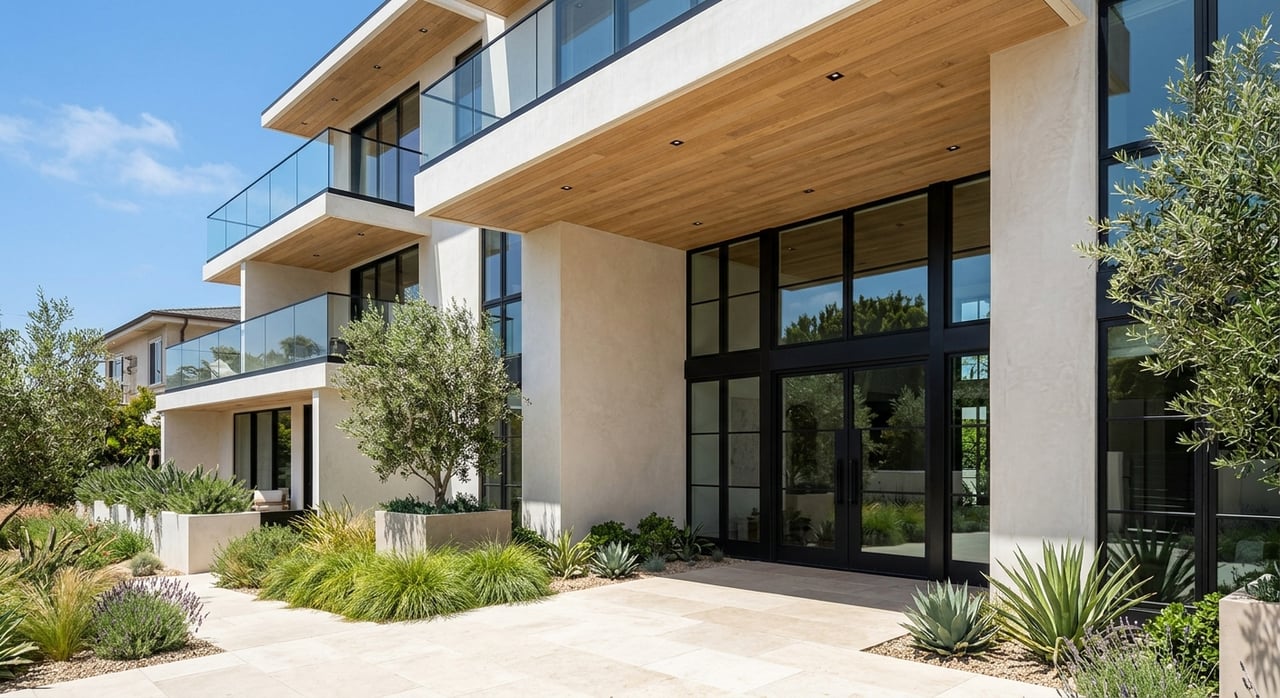
Are Manhattan Beach Condos A Smart Coastal Investment?
July 9, 2026
July 9, 2026
Wondering whether a Manhattan Beach condo is a smart coastal investment? In 90266, that question is less about finding a bargain and more about finding the right ownership fit for your lifestyle, timeline, and long-term goals. If you are comparing a condo to a detached home, looking for a lower-maintenance beach property, or weighing rental potential, the details matter. Let’s dive in.
If you picture condos as the affordable first step into a beach market, Manhattan Beach may surprise you. Current market data shows condo and co-op median sale pricing around $3,698,098, compared with about $3,853,041 for single-family homes.
That means condos are only about 4% below detached homes by median price. In other words, a Manhattan Beach condo is still a luxury purchase. The value proposition is usually about location, convenience, and ownership style rather than a dramatic discount.
Townhomes tell a different story. With a median sale price around $2,065,406, they sit much farther below detached homes and condos, which can make them the stronger option for buyers looking for a bigger pricing gap within Manhattan Beach.
The broader Manhattan Beach market remains highly competitive. Homes sell in about 28 days on average and receive about 1 offer, according to current city-level market reporting.
Quarterly sales data also points to meaningful price growth over the last two years. Manhattan Beach’s overall median sale price rose from about $2.568 million in Q1 2024 to about $3.651 million in Q1 2026, which is roughly a 42% increase over that period.
Condo transaction volume is limited, though, which matters. One recent quarterly report showed only 10 condo sales, so buyers and sellers should expect a smaller data set and a market where each property’s condition, location, and HOA health can carry extra weight.
A Manhattan Beach condo can make sense if you want to own in a high-demand coastal market without taking on the full maintenance load of a detached home. For many buyers, that tradeoff is the real appeal.
Attached housing often works well for buyers who want beach access and less day-to-day upkeep. Manhattan Beach has a Walk Score of 73, which supports the appeal of a more walkable, lower-maintenance lifestyle near local shops, dining, and the coast.
California HOA rules also shift some building-level planning and upkeep to the association. That does not remove ownership costs, but it can reduce the amount of maintenance you manage personally.
In this market, many condo buyers are not simply chasing price. They are often prioritizing time, ease, and location.
If you want a coastal home that is easier to lock up and leave, a condo may fit better than a detached house. That can be especially useful if you split time between properties or prefer a more streamlined ownership experience.
Because condos in Manhattan Beach trade close to detached pricing, they still participate in the same luxury coastal market cycle. That is important if your goal is to own in a supply-constrained beach community where pricing tends to reflect premium location.
Still, smart investing here is not just about appreciation. You also need to understand the building, the association, and the rules that affect future costs and use.
A condo can be a smart investment, but only if the ownership structure is healthy. In Manhattan Beach, the biggest risks are often not obvious during the first showing.
California law requires condo associations to perform reserve study work at least every three years, with annual board review. Annual budget reporting must also include reserve summaries, funding plans, deferred repair disclosures, anticipated special assessments, outstanding loans, insurance summaries, and FHA or VA approval status.
That is why HOA due diligence matters so much. A beautiful unit in an underfunded building can become far more expensive if the association is behind on major repairs or needs to raise funds for capital work.
California law also generally limits how much boards can raise regular assessments or impose certain special assessments without member approval. That offers some guardrails, but it does not eliminate the real cost of deferred maintenance.
For coastal condos, waterproofing and exterior wear deserve close attention. California resale disclosures for condo projects include key association documents, current assessments, unresolved violations, rental restrictions if any, and the most recent Civil Code 5551 inspection report.
That 5551 inspection framework applies to condominium projects with three or more attached multifamily dwelling units and repeats every nine years. For you as a buyer, the practical question is simple: what has the HOA already found, fixed, delayed, or budgeted for?
Insurance is a major part of condo ownership in coastal California. An HOA may insure common areas and exterior structure, but that does not mean every risk is fully covered in the way you might expect.
For example, earthquake damage to common areas may be excluded, and owners can still face assessments for repairs or deductibles. Flood coverage is also separate from most standard homeowners policies, and in Special Flood Hazard Areas, flood insurance is required when there is a government-backed mortgage.
If coverage is difficult to obtain in the regular market, the California FAIR Plan may serve as a last-resort option. The main takeaway is that you should review the HOA’s insurance structure and your own potential exposure alongside monthly dues.
If your investment thesis depends on rental income, start with city rules before you start running numbers. In Manhattan Beach, short-term rentals are allowed only in residential properties within the Coastal Zone and are prohibited elsewhere.
They also require a business license and are subject to a 14% transient occupancy tax with monthly remittance. Leases of 31 or more consecutive days are not considered short-term rentals and are not subject to that tax.
This matters because not every condo will support the same rental strategy. On top of city rules, you also need to check the HOA’s governing documents for rental restrictions that could affect short-term or long-term use.
In Manhattan Beach, condo due diligence should go well beyond the unit finishes and ocean air. A smart purchase starts with clear answers to the questions below.
If you are deciding among property types in Manhattan Beach, the right answer often comes down to your priorities rather than the headline price alone.
| Property Type | Typical Value Proposition | Pricing Context |
|---|---|---|
| Condo/Co-op | Lower-maintenance ownership, coastal convenience, walkability | About $3.698M median |
| Townhome | More affordability relative to other local options | About $2.065M median |
| Single-family home | More privacy and control over the property | About $3.853M median |
For many buyers, condos are best viewed as a maintenance-and-location tradeoff. Townhomes may offer the bigger affordability break, while detached homes offer a different ownership experience with more direct control and responsibility.
So, are Manhattan Beach condos a smart coastal investment? They can be, especially if you value premium location, easier day-to-day ownership, and a property type that still participates in the area’s luxury market.
They are less compelling if your plan depends on unrestricted short-term rentals or if the HOA shows weak reserves, deferred maintenance, or insurance gaps. In Manhattan Beach, the smartest condo purchase is usually the one where the building, the rules, and your use case all line up.
If you want guidance on how a specific condo, townhome, or coastal property fits your goals in Manhattan Beach, Accardo Real Estate Associates can help you evaluate the opportunity with local market insight and a concierge approach.
Stay up to date on the latest real estate trends.

South Bay
Football season is officially back, and sometimes watching from the couch just doesn’t cut it. Whether you’re looking for wall-to-wall TVs, a packed game-day crowd, w… Read more


From exciting new restaurants and coffee shops to fitness studios, shopping destinations, and a major waterfront transformation, here's what's new and coming soon to t… Read more

Pumpkin races, Halloween carnivals, trick-or-treating and the best fall events in Manhattan Beach, Hermosa Beach, Redondo Beach, Rancho Palos Verdes and San Pedro

Tony and his team set out to be not just the best possible realtors but also trusted resources. Their experience goes well beyond their years as South Bay's top-producing Realtors®.
Thinking of buying or selling in the South Bay? Our team specializes in strategic home preparation, elevated marketing, and expert negotiation designed to maximize your home’s value. Call or Text 310.855.3557 to start the conversation.
Palos Verdes Office:
550 Silver Spur Road, Suite 110
Rancho Palos Verdes, CA 90274
Hermosa Beach Office